

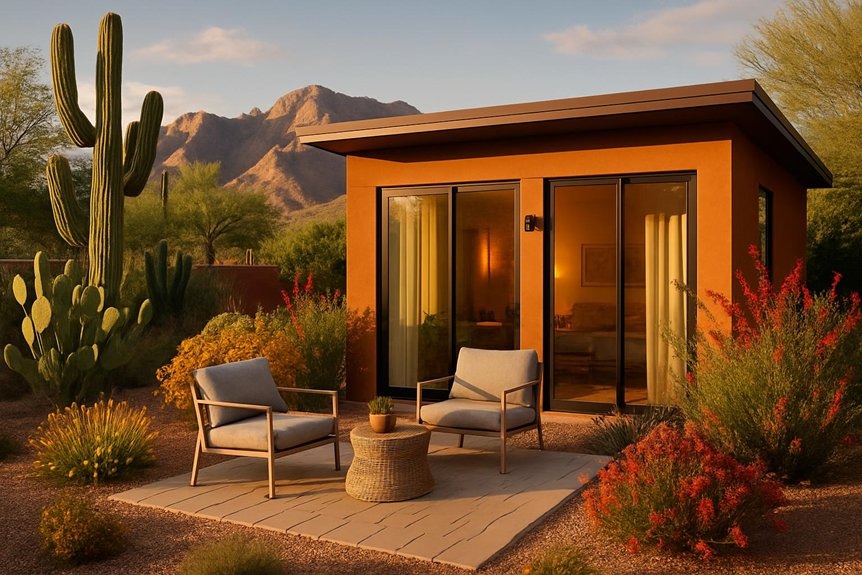
Absolutely, an ADU can generate significant rental income in Tucson, but you need to evaluate key zoning regulations, design requirements, and construction costs first. Understanding setbacks and compliance rules will guarantee your unit can be legally rented. Also, keep an eye on local rental trends to set a competitive price. By steering through these factors effectively, you can maximize your investment potential. There’s plenty more to reflect on to enhance your financial benefits from an ADU.
What You Need to Know About Accessory Dwelling Units (ADUs)?
When considering the addition of an Accessory Dwelling Unit (ADU) to your property, it’s important to understand not only what they’re but also how they can enhance your investment strategy.
An ADU can provide you with rental income, but design considerations are vital. You’ll want to guarantee that the unit is functional and appealing to potential tenants, maximizing your investment potential.
Additionally, familiarize yourself with rental regulations in your area—these can dictate everything from occupancy limits to safety standards. By addressing these elements, you not only comply with local laws but also create a desirable living space that attracts renters.
Ultimately, an ADU can be your ticket to financial freedom and increased property value.
Key Zoning Regulations for ADUs in Tucson
When considering an ADU in Tucson, you need to understand key zoning regulations that can impact your plans.
Zoning district requirements dictate where you can build, while size limitations guarantee your ADU fits within local guidelines.
Knowing these regulations will help you navigate the process and maximize your rental income potential.
Zoning District Requirements
Although maneuvering through zoning regulations may seem intimidating, understanding the key requirements for accessory dwelling units (ADUs) in Tucson is crucial for maximizing your rental income potential.
You’ll need to familiarize yourself with specific zoning classifications, as these dictate where ADUs are permitted. Each classification has its own set of rules, so knowing yours will save you time and money.
Additionally, pay close attention to property setbacks; these determine how far your ADU must be from property lines. Compliance with these regulations not only guarantees your ADU can be legally rented out but also enhances its appeal to potential tenants.
ADU Size Limitations
Understanding the size limitations for accessory dwelling units (ADUs) in Tucson is essential for maximizing your rental income strategy. Tucson’s zoning regulations dictate that ADUs typically can’t exceed 1,000 square feet, ensuring they remain functional yet unobtrusive.
Adhering to these construction standards is vital; it helps you maintain compliance and enhances your property’s appeal. Additionally, design aesthetics play a significant role in attracting tenants. Opting for a layout that blends seamlessly with your primary residence can boost marketability.
How Much Will Your ADU Cost to Build?
Building an accessory dwelling unit (ADU) in Tucson can range from $130,000 to over $300,000, depending on various factors.
Your choice of construction materials plays a significant role in your overall costs. High-quality materials may elevate your budget but can enhance durability and appeal.
Design considerations, including layout and size, will also impact expenses. For instance, a more complex design may require additional labor and expertise, driving up costs.
Prioritizing energy-efficient features can save you money in the long run but may increase initial investment.
Ultimately, it’s essential to balance quality and budget to create an ADU that aligns with your vision and financial goals while ensuring you maximize the potential for rental income.
Evaluating Rental Income Potential From Your ADU
After investing in an ADU, it’s time to assess its potential for generating rental income. Start by conducting a thorough investment analysis.
Research the rental market in Tucson to understand average rates for similar properties. This insight will help you gauge how much income your ADU could realistically generate.
Consider factors like size, amenities, and location, as these can greatly impact your rental price. Also, think about your target tenants; whether you’re aiming for long-term renters or short-term vacationers, your strategy will influence pricing.
Keep an eye on market trends and be prepared to adjust your approach to maximize your earnings. With the right analysis and strategy, your ADU can become a lucrative source of income.
How Location Affects ADU Rental Demand
Where you place your ADU can substantially influence its rental demand. The location impacts how appealing your unit is to potential tenants.
Consider these factors:
- Proximity to Urban Amenities: Being close to shops, restaurants, and public transport can attract renters who value convenience.
- Neighborhood Trends: Areas experiencing growth or revitalization can boost demand, as more people look to live in emerging neighborhoods.
- Safety and Community: Tenants prioritize safety and a sense of community; a well-regarded neighborhood can enhance your ADU’s appeal.
Effective Tenant Management Strategies for Your ADU
Managing tenants effectively is essential for maximizing the rental income from your ADU in Tucson. Start with thorough tenant screening; it’s your first line of defense against potential issues. By verifying backgrounds, income, and rental history, you can choose tenants who respect your property and pay on time.
Next, clearly outline expectations in lease agreements. A well-structured lease not only protects you legally but also sets the tone for a respectful landlord-tenant relationship. Make sure to include terms on maintenance responsibilities, noise levels, and payment schedules.
Open communication is key—respond promptly to concerns and encourage feedback. By implementing these strategies, you’ll create a harmonious living environment that benefits both you and your tenants, ultimately enhancing your rental income potential.
Financing Your ADU Construction
When financing your ADU construction, you’ve got several loan options to evaluate, each with unique benefits.
It’s essential to budget effectively for all construction costs and keep potential tax implications in mind, as they can considerably impact your return on investment.
Loan Options Available
As you explore the possibility of financing your ADU construction in Tucson, understanding the various loan options available can greatly impact your investment.
Here are three popular choices:
- Home Equity Loans: Leverage your home’s equity to fund your ADU, often at lower interest rates compared to other loans.
- Construction Financing: This type of loan covers the costs during the building phase, giving you flexibility while ensuring the project stays on track.
- Personal Loans: If you need a quick solution, personal loans can provide the necessary funds without the need for collateral.
Each option offers unique benefits, so consider your financial situation and long-term goals.
Choosing wisely can lead to a successful ADU investment that enhances your freedom and financial future.
Budgeting for Construction Costs
Budgeting for construction costs is essential to ensuring your ADU project remains financially viable and meets your expectations. Start with accurate cost estimation; consider materials, labor, permits, and unexpected expenses.
This foresight keeps your budget intact and your project on track. Explore construction financing options that provide flexibility and align with your financial goals. Whether it’s a home equity line of credit or a dedicated loan, choose a financing solution that empowers you to invest confidently.
Remember, a well-planned budget not only mitigates stress but also maximizes your potential rental income. By being diligent and informed, you’re not just building an ADU; you’re creating a pathway to financial freedom.
Make every dollar count!
Potential Tax Implications
Have you considered how financing your ADU construction could affect your tax situation? Understanding the potential tax implications can be a game changer for your investment.
Here are three key areas to think about:
- Tax Deductions: You might be eligible for deductions on interest from the financing of your ADU, reducing your taxable income.
- Property Depreciation: As an investment property, you can take advantage of depreciation, allowing you to write off a portion of the construction costs over time.
- Rental Income: Any income generated from renting the ADU can also be subject to taxes, but you can offset this with the deductions mentioned.
Navigating these aspects can empower you to maximize your rental income and financial freedom.
Tax Considerations for Renting Out Your ADU
While renting out your ADU in Tucson can provide a lucrative income stream, it’s essential to understand the tax implications that come with it.
First, you’ll need to report all rental income you earn, as the IRS expects you to claim it. However, don’t forget that you can also deduct expenses related to your ADU, such as maintenance, repairs, and property management fees.
Keeping track of these deductible expenses is vital because they can greatly lower your taxable income. Additionally, familiarize yourself with local tax laws that may affect rental properties.
Being informed about your tax obligations not only helps you comply but also maximizes your profit, allowing you to enjoy the freedom that comes with financial independence.
Long-Term Advantages of Investing in an ADU
Investing in an ADU can offer considerable long-term advantages that extend well beyond immediate rental income.
By adding an ADU to your property, you’re not just creating a new source of revenue; you’re also setting yourself up for future financial benefits, including:
- Long-term appreciation: As the real estate market grows, your property value can increase considerably, bolstered by the presence of an ADU.
- Increased property value: An ADU can enhance the overall worth of your property, making it more attractive to potential buyers.
- Flexible living arrangements: You have the freedom to accommodate family, guests, or tenants, ensuring your space meets your evolving needs.
The Bottom Line for Tucson Homeowners
If you’ve made it this far, you already understand something most homeowners don’t…
An ADU isn’t just a “nice-to-have” project. It’s a strategic move.
It’s how you create space without leaving your neighborhood.
It’s how you take care of family without sacrificing privacy.
And for a lot of people right now, it’s how you turn your property into something that actually works for you instead of just sitting there.
But here’s the part that trips most folks up…
All the rules, permits, zoning, and costs can feel like a mess if you try to figure it out on your own. And as you’ve seen, there are a lot of moving pieces involved, from zoning restrictions to utility connections to financing options .
That’s exactly why working with a local team matters.
Someone who already understands Tucson’s regulations.
Someone who knows what flies with permits and what gets rejected.
Someone who can look at your property and give you a straight answer instead of a guess.
👉 That’s where Tiny Homes of Tucson comes in.
They don’t just build ADUs. They help you navigate the entire process, from idea to move-in, without the usual headaches.
So instead of spending months second-guessing everything…
You can actually move forward with a plan that makes sense.
If you’re even thinking about adding an ADU, the smartest next step isn’t more research.
It’s getting clearer.
Talk to a team that’s already done this before, right here in Tucson.
Conclusion
Investing in an ADU in Tucson can be a smart move, especially with the city’s growing rental market. In fact, studies show that properties with ADUs can see rental income increases of up to 50% compared to similar homes without them. By understanding zoning regulations, costs, and effective tenant management, you can maximize your investment. With careful planning, your ADU isn’t just a space; it’s a pathway to financial growth and stability.