

Can I Build an
ADU on My Property?
Watch Brad Jones interview to learn everything you need to know about building an accessory dwelling unit in Tucson, Arizona.
Why Homeowners Build ADUs
Accessory Dwelling Units are one of the fastest-growing home improvement trends in the country. In Tucson, new zoning laws have made it easier than ever to add an ADU to your property.
Generate Rental Income
A well-built ADU can produce $1,500–$3,000+ per month in rental income in the Tucson market. This passive income can offset your mortgage, fund renovations, or build long-term wealth.
Multigenerational Living
Keep aging parents close while maintaining independence for everyone. Adult children can have their own space while staying connected to family support.
Increase Property Value
Adding an ADU can increase your property value by 20–35%. Buyers are increasingly willing to pay a premium for homes with income-generating potential.
Create a Home Office
A dedicated workspace separate from your main home improves productivity and work-life balance. Perfect for remote workers, freelancers, and small business owners.
Guest Accommodation
Provide visiting family and friends with comfortable, private accommodations without disrupting your daily routine or taking up your guest room.
Aging in Place
An ADU allows seniors to downsize without leaving their community. Move into the smaller unit and rent out the main house, or keep the ADU for caregivers.
How to determine if your property qualifies
Tucson has some of the most ADU-friendly zoning regulations in the country. Arizona state law requires cities to allow at least one attached and one detached ADU on residential lots. Here’s what you need to check:
Zoning Compliance
Your property must be zoned for residential use. In Tucson, most single-family residential zones (R-1, R-2, R-3, R-4) allow ADUs. Verify your specific zone designation with Pima County.
Lot Size & Setbacks
ADUs in Tucson can be up to 1,000 sq ft or 75% of the primary home’s area (whichever is smaller). Minimum setbacks vary by zone — typically 5-10 feet from property lines.
Parking Requirements
Many Tucson zones waive parking requirements for ADUs within ¼ mile of a transit stop. Otherwise, one additional parking space is typically required.
Utility Access
Your property needs adequate utility capacity for an additional unit — water, sewer, electric, and gas connections. Older homes may need panel upgrades.
Not Sure? Use Our Free Tool
Enter your address below and we’ll tell you instantly if your property qualifies for an ADU under current Tucson zoning laws.
Budget Considerations
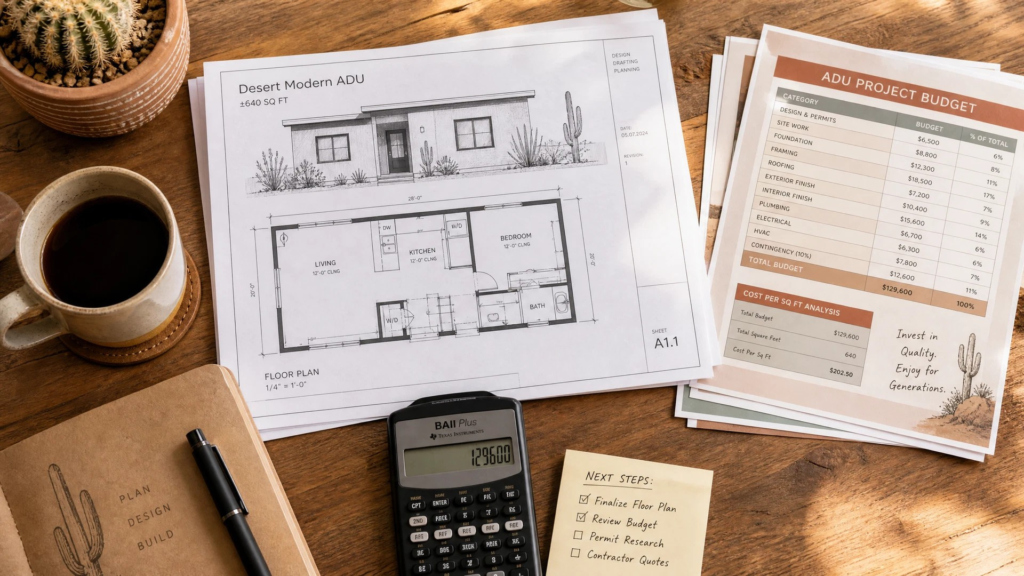
Building an ADU is a significant investment, but it’s one that pays for itself over time. Understanding the full cost picture helps you plan with confidence.
Attached ADU
$80,000 – $150,000
Best for limited space. Shares a wall with the main house. Lower construction costs due to shared infrastructure.
Detached ADU
$120,000 – $250,000
Maximum privacy and independence. Requires separate utility connections. Most popular option for rental income.
Garage Conversion
$60,000 – $120,000
Most cost-effective option. Uses existing structure. May require insulation, plumbing, and electrical upgrades.
How to Finance Your ADU
1. Cash / Savings
No interest, full ownership immediately. Best for those with liquid assets.
2. Home Equity Loan / HELOC
Borrow against your home’s equity. Typically lower rates than construction loans.
3. Construction Loan
Short-term financing that converts to a mortgage after completion. Rates around 7–9%.
4. FHA 203(k) Loan
Bundles home improvement costs into your mortgage. Ideal for first-time ADU builders.
Pro Tip: Build a 15% Contingency Into Your Budget
Unexpected costs are common in construction — from soil conditions to utility upgrades to material price increases. We recommend setting aside an additional 10–15% of your total budget as a contingency fund. This ensures your project stays on track even when surprises arise.
Design for Aging in Place
An ADU is one of the most thoughtful investments you can make for aging family members — or for your own future. By designing with accessibility in mind from the start, you create a space that adapts to changing needs over decades.
Single-Story, Open Layout
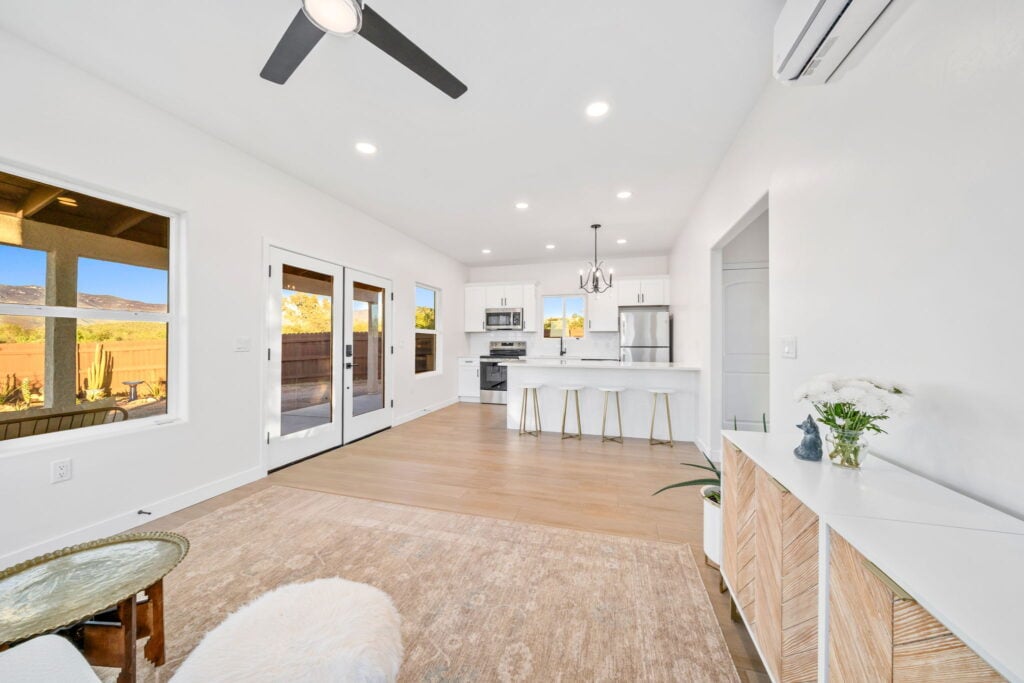
Eliminate stairs and narrow hallways. Wide doorways (36″+) accommodate walkers and wheelchairs. An open floor plan reduces obstacles and improves visibility.
Accessible Bathrooms
Walk-in or roll-in showers with built-in seating. Grab bars near toilets and inside showers. Non-slip flooring throughout, especially in wet areas.
Smart Lighting & Controls
Motion-sensor lighting in hallways and near the bed. Lower light switches and higher outlets. Smart thermostats controllable by phone or voice.
Universal Design Features
Lever-style door handles instead of knobs. Lower countertop heights for seated use. Accessible appliance placements like wall ovens and drawer dishwashers.
ADU Construction Cost $80,000 – $250,000
One-time investment that adds lasting value to your property. Pays for itself through rental income or by avoiding assisted living costs.
ADU Construction Cost $80,000 – $250,000
Recurring monthly costs that never build equity. National averages range from $4,000–$8,000 per month and continue to rise annually.
Common Mistakes to Avoid
Building an ADU is a rewarding project, but missteps along the way can turn it into a frustrating experience. Here are the most common pitfalls we see homeowners encounter.
Skipping Zoning Research
Starting construction without confirming your property’s zoning compliance is the #1 mistake. Tucson’s regulations are ADU-friendly, but each zone has specific setback, height, and size requirements. A single violation can mean costly modifications or a forced tear-down.
Always check with Pima County Planning before finalizing your design.
Underestimating Total Costs
Many homeowners budget only for the structure itself and forget permits, utility connections, landscaping restoration, and design fees. Under-budgeting leads to mid-project pauses, half-finished work, and financial stress.
Build in a 15% contingency fund. Get a detailed written estimate before committing.
Choosing the Lowest Bidder
Selecting a builder based solely on the lowest price often leads to subpar workmanship, missed deadlines, and cost overruns from rework. ADU construction requires specific expertise in small-space design and local code compliance.
Choose a builder with proven ADU experience and local references. Verify licenses and insurance.
Neglecting Permit Timelines
The permitting process in Tucson can take 4–8 weeks or longer. Starting before permits are approved risks fines, work stoppages, and forced modifications. Rushing this step is a common and costly error.
Submit plans early and work with a builder who handles permitting as part of their service.
How it Works
At Tiny Homes of Tucson, we simplify the ADU creation process by combining innovative construction techniques with smart design solutions. Our step-by-step approach ensures that every ADU is customized to your needs and completed with precision.
01
Review Your Property
Enter your address in our free ADU feasibility tool to confirm zoning compliance and get a preliminary assessment of what’s possible on your lot.
02
Schedule a Design Consultation
Meet with our expert team to discuss your goals, preferences, and budget. We’ll help you choose the right ADU type — attached, detached, or garage conversion.
03
Permits & Approvals
Our team handles the entire permitting process with Pima County. We submit plans, manage inspections, and ensure full code compliance.
04
Construction Begins
With permits in hand, construction starts. Typical ADU builds take 4–10 months depending on complexity. We keep you informed at every stage.
05
Final Walkthrough & Enjoy
After final inspections pass, you’ll receive a complete walkthrough. Then it’s time to move in, rent out, or start enjoying your new space.