

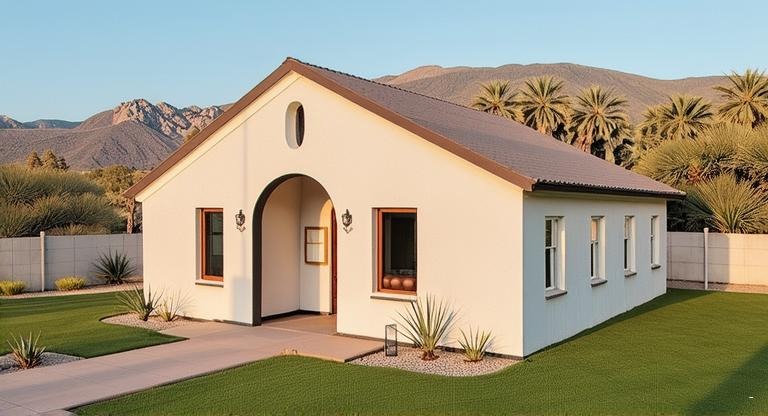
If you own a home with a usable backyard and you are thinking about what to do with it, the financial case for an accessory dwelling unit deserves a serious look. Not the marketing version, where every number is presented at its most optimistic, but the real version, grounded in what researchers, appraisers, and federal housing data actually show about how ADUs perform as investments over time.
The short answer is that ADUs are among the strongest performing residential investments available to a homeowner today, specifically because they generate two forms of return simultaneously: monthly rental income and property value appreciation. Very few home improvements accomplish both. A kitchen remodel improves livability and may recover 60 to 70 cents on the dollar in resale value, but it does not produce income. A stock portfolio produces income but does not sit on land you already own. An ADU does both, and it does so on an asset base, your lot, that cost you nothing additional to acquire.
Here is a thorough look at how ADU investments actually work, what the data shows, and what Tucson homeowners specifically should understand before making a decision.
The Two Returns You Are Actually Buying
Understanding ADU investment requires separating two distinct financial mechanisms that are often blended together in a way that obscures the true picture.
The first is cash flow. A completed, tenanted ADU generates monthly rental income. In the Tucson market, a well-designed detached ADU of 500 to 700 square feet typically rents for $1,000 to $1,500 per month depending on location, finish level, and whether it is positioned as a long-term or short-term rental. After accounting for property taxes, insurance, and a reasonable maintenance reserve of roughly 1 to 2 percent of the unit’s value annually, most Tucson ADU owners are netting $800 to $1,200 per month in cash flow. That is $9,600 to $14,400 per year from a single structure on land you already owned.
The second is appreciation. A Federal Housing Finance Agency study covering a decade of California data found that properties with ADUs appreciated at an annualized rate of 9.34 percent compared to 7.65 percent for comparable properties without ADUs. That is not a marginal difference. Over ten years, the compounding effect of that additional 1.7 percentage points of annual appreciation translates to a meaningfully higher resale price. The same study found that the median appraised value of homes with ADUs reached $1,064,000 in 2023, compared to $715,000 for similar homes without them. The gap is substantial and has been widening.
Most investment analyses focus on one or the other. The real power of an ADU is that both are working at the same time, on the same property.
What the ROI Numbers Look Like in Practice
Return on investment for an ADU build is typically measured in two ways: cash-on-cash return and simple payback period. Both are useful and both tell a different part of the story.
Cash-on-cash return measures annual net rental income as a percentage of the total amount invested in the build. In competitive rental markets, ADUs consistently deliver 8 to 12 percent annual returns when combining rental income with property appreciation, significantly outperforming most traditional home improvements and many conventional investment products. On a Tucson build costing $150,000 all-in, a conservative annual net income of $12,000 represents an 8 percent cash-on-cash return. That is before any property value uplift is factored in.
The payback period is how long rental income takes to recover the full cost of construction. On the cash flow alone, a $150,000 build generating $12,000 per year in net income reaches payback in approximately 12 to 13 years. When the property value increase is included, which research consistently places at 20 to 35 percent of overall home value for a well-built permitted ADU, the real break-even point compresses substantially. Many Tucson homeowners who build a quality ADU are looking at an effective payback window of 7 to 10 years when both income and appreciation are counted together.
One useful rule of thumb cited by appraisers: a newly constructed ADU typically adds approximately 100 times its monthly rental value to the appraised value of the property. An ADU renting for $1,300 per month may add roughly $130,000 to your property’s assessed value. On a build costing $150,000, that is nearly full recovery of the construction cost in the appraisal, before a single month of rent is collected.
How ADUs Compare to Other Residential Investments
Context matters when evaluating any investment. Here is how ADUs stack up against the alternatives a typical Tucson homeowner might actually consider.
Buying a separate investment property is the most direct comparison. The challenge is that a stand-alone rental property requires a full purchase price, a separate down payment, a separate mortgage, and separate management overhead. An ADU requires none of that. You are building on land you already own, leveraging equity you already have, and adding to an asset already inside your balance sheet. The land cost, which represents 30 to 50 percent of a typical multifamily investment property acquisition, is already paid for.
High-yield savings accounts and money market funds are currently producing 4 to 5 percent annually at best, with no appreciation component and no inflation hedge. An ADU at 8 to 12 percent combined return, on a hard asset that tends to appreciate with inflation, represents a fundamentally different risk-return profile for a homeowner who already has real estate exposure and understands the asset class.
Kitchen and bathroom remodels are frequently cited as high-ROI home improvements. National data suggests they recover 60 to 80 percent of their cost in resale value. They produce no ongoing income. An ADU, by contrast, generates income every month it is occupied and typically recovers a comparable or greater share of its cost in property value while doing so.
What Makes a Tucson ADU Perform Well as an Investment
Not all ADU builds produce the same return. The factors that separate high-performing from mediocre ADU investments are well documented and worth understanding before you commit to a project.
- Permitted construction. An unpermitted ADU does not appear on a title report, cannot be legally represented as rental income to lenders or appraisers, and can become a liability at the point of sale. A fully permitted build is the only version that delivers the full investment return described in this article.
- Design appropriate for the rental market. Units with a full kitchen, a private bathroom, a separate entrance, and adequate natural light consistently command higher rents and maintain lower vacancy rates than units that compromise on any of these fundamentals. Design choices made to save money during construction often reduce monthly income more than they saved.
- Detached over attached where the lot allows. Detached units offer more privacy for both the tenant and the primary homeowner, which translates to stronger rental demand and typically higher rents. Where lot size and setbacks permit, a detached unit is almost always the stronger investment choice.
- All-inclusive cost planning. Many homeowners underestimate the full cost of an ADU build by focusing on the construction number without accounting for design fees, permit fees, site preparation, utility connections, and landscaping restoration. A firm, all-inclusive estimate from a builder before the project begins is essential for accurate ROI modeling.
- Local permit expertise. A builder unfamiliar with Tucson’s specific zoning codes and permit requirements can cause delays that increase carrying costs and push back the date rental income begins. Local expertise is not a premium worth paying, it is a baseline requirement for a project that performs according to plan.
The Tucson Market Context
Tucson’s rental market has remained tight for several years, supported by consistent demand from University of Arizona students, healthcare workers, young professionals, and out-of-state relocators from higher-cost markets. Vacancy rates across the metro area have stayed low, which is the single most important factor for sustained ADU rental income.
Tucson home values have also appreciated meaningfully over the past decade, which means that the equity base many long-term homeowners are sitting on is large enough to finance an ADU build without a second mortgage in many cases. A homeowner who purchased in 2014 and has watched their property value grow has, in many cases, more than enough equity to support an ADU construction loan or cash-out refinance that funds the entire build.
Arizona’s 2022 statewide ADU legislation also removed many of the barriers that previously made ADU construction difficult or uncertain. The regulatory risk that made ADU investing complicated a decade ago has been substantially reduced for Tucson homeowners operating under the current framework.
The Honest Caveats
A complete picture of ADU investment requires acknowledging the risks alongside the returns.
Construction cost overruns are the most common way homeowners see their expected returns shrink. A project budgeted at $140,000 that finishes at $180,000 extends the payback period and reduces the cash-on-cash return proportionally. Working with a builder who provides a firm, all-inclusive estimate and has a documented track record of finishing on budget is the most direct mitigation.
Vacancy risk is real but manageable. A unit sitting empty for two months generates no income and reduces the annual return for that year. Tucson’s tight rental market reduces this risk relative to other cities, but no rental property is immune to turnover costs and occasional vacancy. A realistic financial model assumes 90 to 95 percent occupancy, not 100 percent.
Property tax increases accompany a permitted ADU because the improvement adds assessed value. This is a real cost that should be included in any net income calculation. It is also, by definition, a confirmation that the build added value to the property.
The Bottom Line for Tucson Homeowners
Across the metrics that matter in real estate investment, ADUs hold up well. They generate income. They appreciate. They leverage land already owned. They outperform most comparable home improvements on a combined return basis. And in Tucson’s current market, the regulatory and demand conditions are favorable for homeowners who move forward with a quality, permitted build.
The investment case is strongest for homeowners who intend to hold the property for at least five to seven years, who have access to financing through existing equity, and who work with a builder who knows the Tucson permit process and can deliver a finished unit on time and on budget.
If you own a home in Tucson and have been thinking about whether your backyard could support an ADU, the most useful first step is a property-specific assessment rather than more general research.
Tiny Homes of Tucson offers free site visits for homeowners across the Tucson area, covering what your lot can support, what design options make sense for your goals, and what the all-inclusive build cost looks like. It is the fastest way to replace general numbers with real ones specific to your property.